
Commuting to Bellevue During the Summer of Soccer
The 2026 FIFA World Cup is bringing global excitement to the Puget Sound region this June and July. Whether you commute to Bellevue by bus, light rail, bike, or car, your daily trip may look a little different. Here's what employees and employers need to know to keep commutes moving.
What’s Happening and Why It Matters
Seattle is one of the host cities for the 2026 FIFA World Cup, with six matches at Lumen Field (Seattle Stadium) between mid-June and early July. Hundreds of thousands of visitors will be in the region, and that means traffic, transit, and road conditions across the Puget Sound will be affected, including for people commuting to and from Bellevue.
Even though the games are in Seattle, the effects will reach the Eastside. I-5 construction pauses and reopenings, increased traffic on I-90 and SR 520, packed Park & Rides, and busier-than-usual light rail service on the 2 Line will all shape what your commute looks like this summer.

Seattle Match Schedule
All games are at Lumen Field in Seattle, but the energy will be felt across the region. Watch parties and fan events will be happening throughout Bellevue and the Eastside, and many visitors will be staying in Bellevue-area hotels during the tournament. Expect bigger crowds in Downtown Bellevue throughout the day on match days — not just during game time. Traffic and transit impacts typically begin about six hours before kickoff and continue into the evening.
Monday, June 15 | Kickoff at 12:00 PM | Belgium vs Egypt
Friday, June 19 | Kickoff at 12:00 PM | Australia vs USA
Wednesday, June 24 | Kickoff at 12:00 PM | Bosnia-Herzegovina vs Qatar
Friday, June 26 | Kickoff at 8:00 PM | Egypt vs Iran
Wednesday, July 1 | Kickoff at 1:00 PM | Round of 32
Monday, July 6 | Kickoff at 5:00 PM | Round of 16
Heads Up! Impacts won't be limited to match days. Expect heavier-than-usual traffic throughout the tournament, particularly on cross-lake corridors (I-90, SR 520) and near light rail stations. Non-match days will still see increased visitor traffic across the region.
How Your Bellevue Commute May Be Affected
If you commute to or from Downtown Bellevue or elsewhere on the Eastside, here are the main things to plan for:
-
I-90 and SR 520 will see heavier volumes as visitors move between Seattle and Eastside hotels, venues, and fields. Give yourself extra buffer time, especially on match days and the days before and after.
-
All lanes of I-5 will be open from June 8 through July 10 for the tournament. However, during the weekends of June 5–8 and July 10–13, northbound I-5 will be fully closed between I-90 and NE 45th Street for work zone setup and breakdown.
-
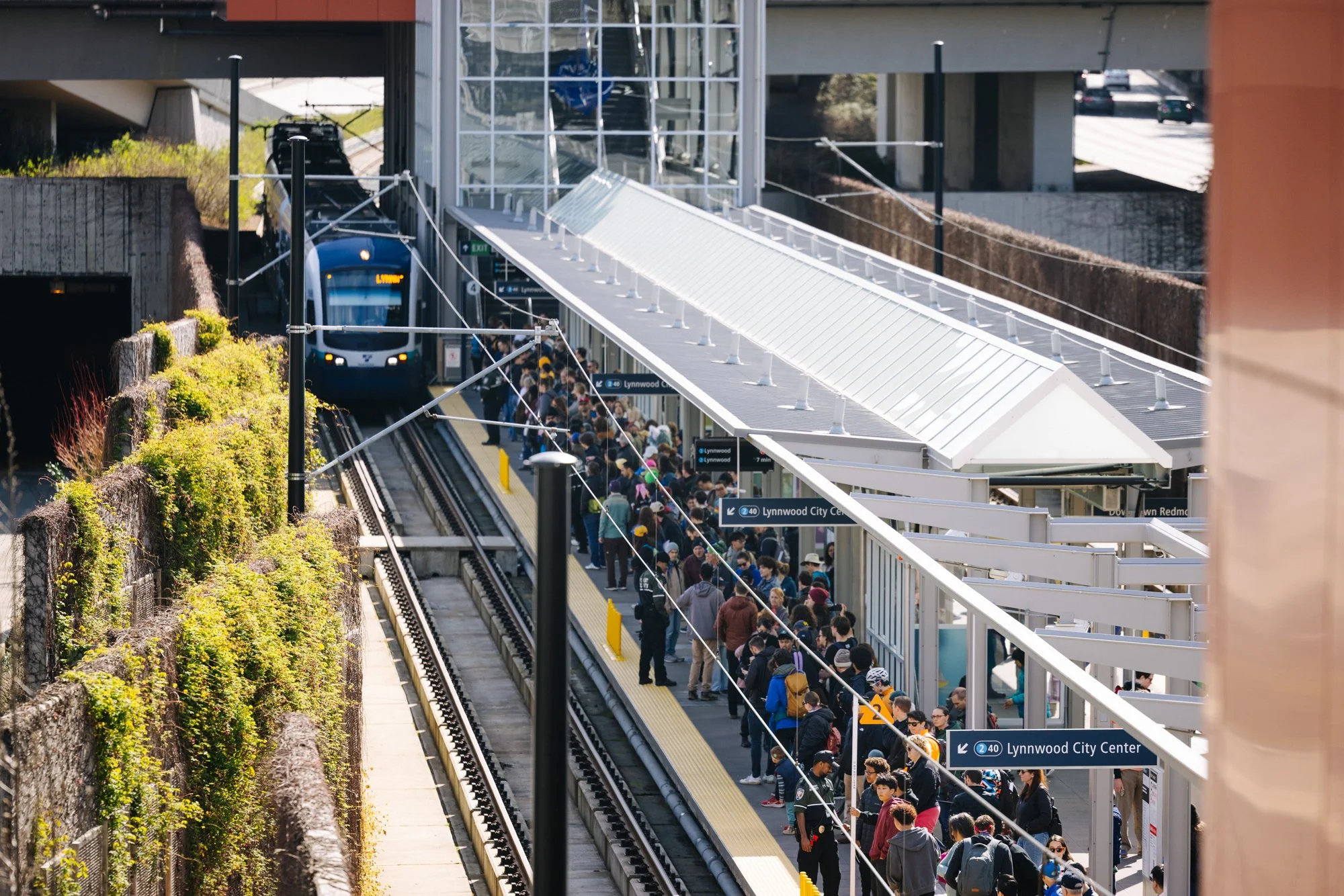
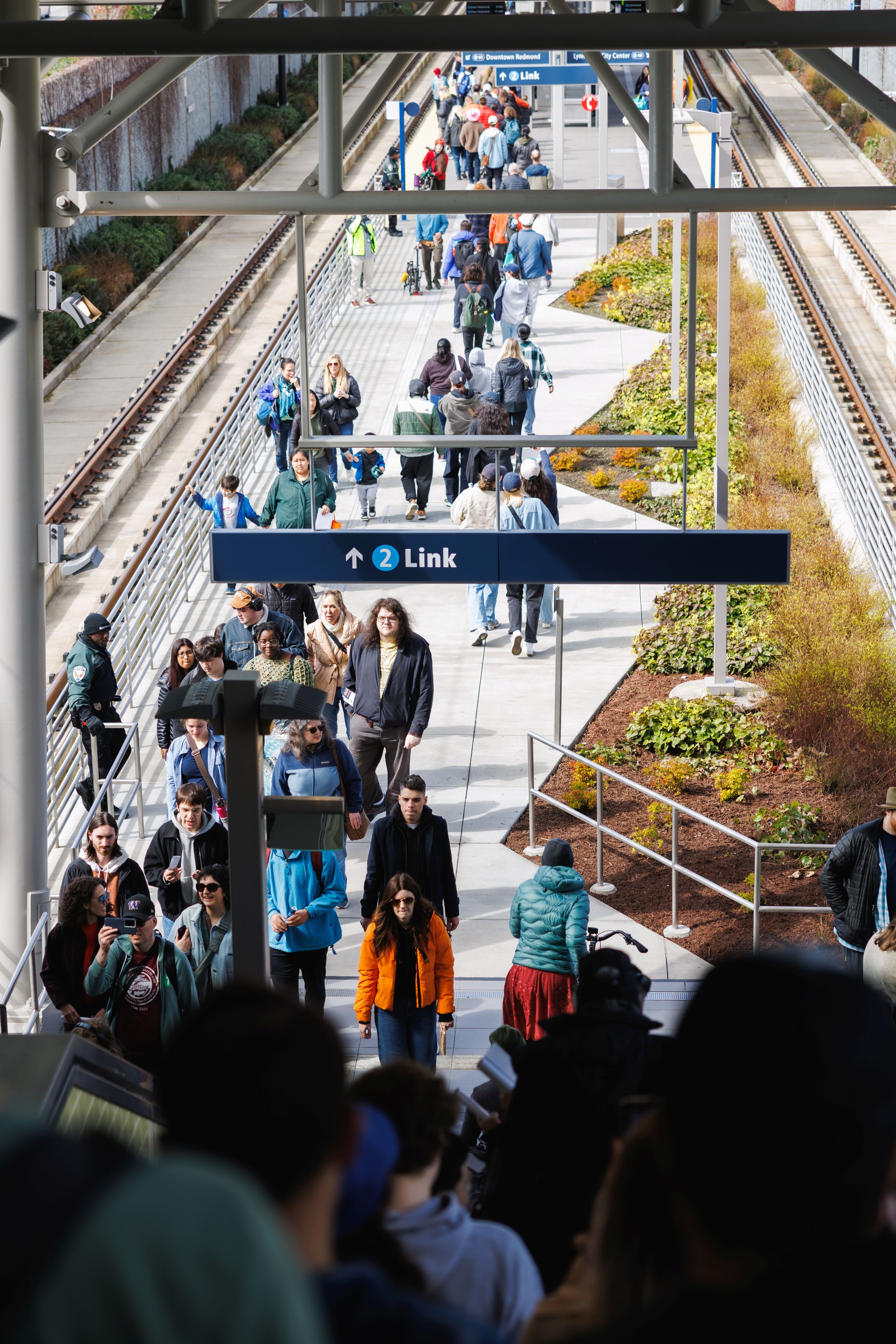
Sound Transit will run trains every 4–8 minutes on the 1 and 2 Lines, but stations will still be busy. If you ride the 2 Line from Bellevue, expect longer waits and fuller trains, especially at transfer stations. Check Sound Transit's preferred station guide for tips to limit station crowding.
Sound Transit will use a queue system at crowded stations on match days, which means you might have to wait in line to get on a train. It will not feel like a typical commute day.
-
Reserved parking began May 1, and lots will fill faster than usual. If you drive to a station, consider biking, carpooling, or getting dropped off instead. Reserve a spot if you haven't already.
The bottom line: build extra time into your commute this summer, stay flexible with your travel mode, and sign up for alerts from Sound Transit and King County Metro so you're not caught off guard.
What Employers Can Do Now
This summer is a good time to make sure your employees have reliable commute options, and to explore programs that can help.
ORCA Business Programs
If your organization doesn't already participate in an ORCA Business Program, now is the time to look into it. ORCA Passport and ORCA Choice give your employees access to the full regional transit network (bus, light rail, streetcar, ferry, and more) through employer-subsidized passes. With summer traffic disruptions ahead, transit will be one of the most reliable ways for your team to get to work.
Connect Bellevue offers free consultations to help Bellevue businesses enroll, manage, and get the most out of these programs.
Other Ways to Support Your Team
Beyond ORCA, there are a few practical steps employers can take to help employees navigate summer commute disruptions:
-
Forward this page to your team or post it on your internal channels. The more advance notice people have, the smoother the transition.
-
If your workplace allows flexible hours or hybrid schedules, consider promoting those options during match weeks so employees can shift their commutes around peak congestion.
-
Connect Bellevue can coordinate a free on-site event where King County Metro and Sound Transit representatives provide information, answer questions, and distribute ORCA materials to your employees.
-
Let your employees know they can earn local gift cards just for logging non-drive-alone trips. It's free for anyone who lives or works in Bellevue. Learn more at ChooseYourWayBellevue.org/Rewards
-
King County Metro and Connect Bellevue are distributing preloaded $25 ORCA cards to eligible Bellevue employers, especially small businesses and those in hospitality and service sectors who don't currently offer ORCA Passport or Choice. These cards help employees explore transit options during a summer when reliable alternatives to driving will matter most.
What Employees Can Do
You don't need to wait for your employer to take action. There's a lot you can do right now to set yourself up for a smooth commute this summer.
Does Your Employer Offer ORCA?
Through ORCA Business Programs, employers can provide unlimited transit access for as little as $15 per month, compared to the $108 a monthly pass would cost on your own. If your employer doesn't offer ORCA yet, we can help. Share your HR contact with us and we'll reach out to them about getting a program started at your workplace.
-
If you normally drive to work, this is a good summer to try transit, biking, or carpooling, at least on the heaviest match days. Use the trip planning tools from King County Metro and Sound Transit to map out a backup route before you need one.
-
Route changes, delays, and schedule adjustments will happen throughout the summer. Subscribe to Sound Transit alerts and King County Metro alerts so you hear about disruptions before they affect your trip.
-
If you don't have an ORCA card, you have a few options for riding transit this summer:
Tap to Pay: Use your credit or debit card directly on the ORCA reader.
ORCA card: Load value or a pass onto a personal ORCA card. Available online or at transit agency offices.
Regional Day Pass: If you plan to ride more than twice in one day, a $6 All-Day PugetPass covers unlimited trips on most buses and Link light rail. It activates when you tap on your next trip and expires at 3 a.m. the next day.
3-Day Puget Pass: Adult riders can travel around the region for multiple days for an $18 flat rate.
-
If you live or work in Bellevue, you can earn gift cards through Choose Your Way Bellevue Rewards just by logging your non-drive-alone trips.
Log 16 trips and earn a $10 coffee shop gift card.
Log 20 trips for a chance at a $50 grocery card
Log 30 trips for a chance at a $150 restaurant gift card.
Sign up and start logging today.
Transit Details by Mode:
Here's a closer look at what's changing across the transit network this summer. While most of these changes are focused on Seattle and the stadium area, they affect the broader system that Bellevue commuters depend on.
-
Sound Transit will increase service on both lines, running trains every four minutes through Downtown Seattle on match days. The 2 Line, which connects Bellevue to Seattle, will see higher ridership across the board.
On match days, Sound Transit will use a queue system at busy stations. That means you may have to wait in line to board. It won't feel like a typical commute day, so plan accordingly. Check Sound Transit's preferred station recommendations for guidance on where to board.
Sign up for Sound Transit alerts to stay informed about delays and changes. Need security assistance while on board? Text 206-398-5268.
-
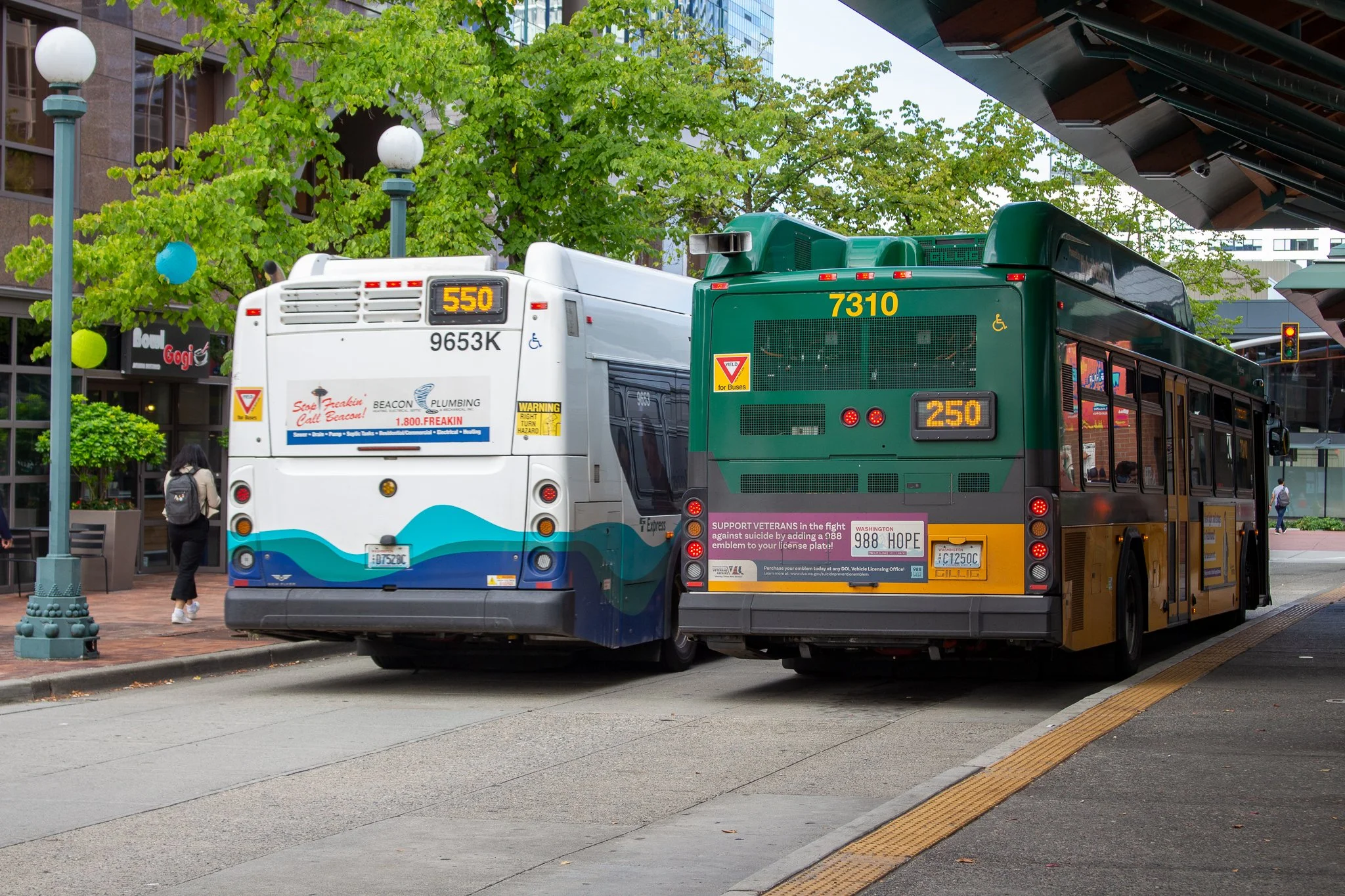
King County Metro plans to add 60 buses on match days and 30–40 additional buses on non-match days during the tournament.
Some bus routes near the stadium area will be rerouted or through-routed. If you connect through Downtown Seattle, check King County Metro's event map to see if your route is affected. Route changes should be reflected in Google Maps, but Metro's own alerts are the most reliable source.
King County Metro will operate a free match-day shuttle between Lumen Field and Seattle Center with stops along Third Ave, plus a free Waterfront Shuttle along Alaskan Way running all summer (May 21–September 7).
All-door boarding is encouraged on all buses. Use your ORCA card, credit/debit card, or Tap-to-Pay to board through any door.
-
Additional Sounder trains and schedule adjustments will be in place for match days, with departures timed to arrive before kickoff and return trips scheduled about an hour after matches end. If you're a regular Sounder commuter, double-check your schedule on Sound Transit's site, as your normal departure times may shift.
-
Driving in the broader region will be more congested than usual throughout the tournament — not just on match days. Expect heavier traffic on I-5, I-90, and SR 520, especially on days with back-to-back games between Seattle and Vancouver.
Revive I-5 construction will pause for the tournament, with all lanes open June 8 through July 10. On the weekends of June 5–8 and July 10–13, northbound I-5 between I-90 and NE 45th Street will be fully closed for work zone setup and breakdown.
Pedestrian zones and street closures near the stadium will affect driving in Pioneer Square, SODO, and the International District on match days.
If you typically drive to work in Bellevue, be aware that increased regional traffic may add time to your commute even if you don't go anywhere near Seattle.
-
Biking can be a good way to avoid congestion, but there are a few things to know. On match days, bikes and scooters will not be allowed on Link light rail. If you usually ride to a station and bring your bike on the train, plan to lock up at a BikeLink locker at the station instead.
Quick Links & Resources
Bookmark these for easy reference throughout the summer.
Questions? We're Here to Help.
Connect Bellevue supports employers and employees across Downtown Bellevue with commute planning, ORCA Business Program enrollment, transportation program development, and transportation resources.

Tommie Lorene
Transportation Demand Management Program Manager

Mackenzie McDonald
Transportation Demand Management Specialist